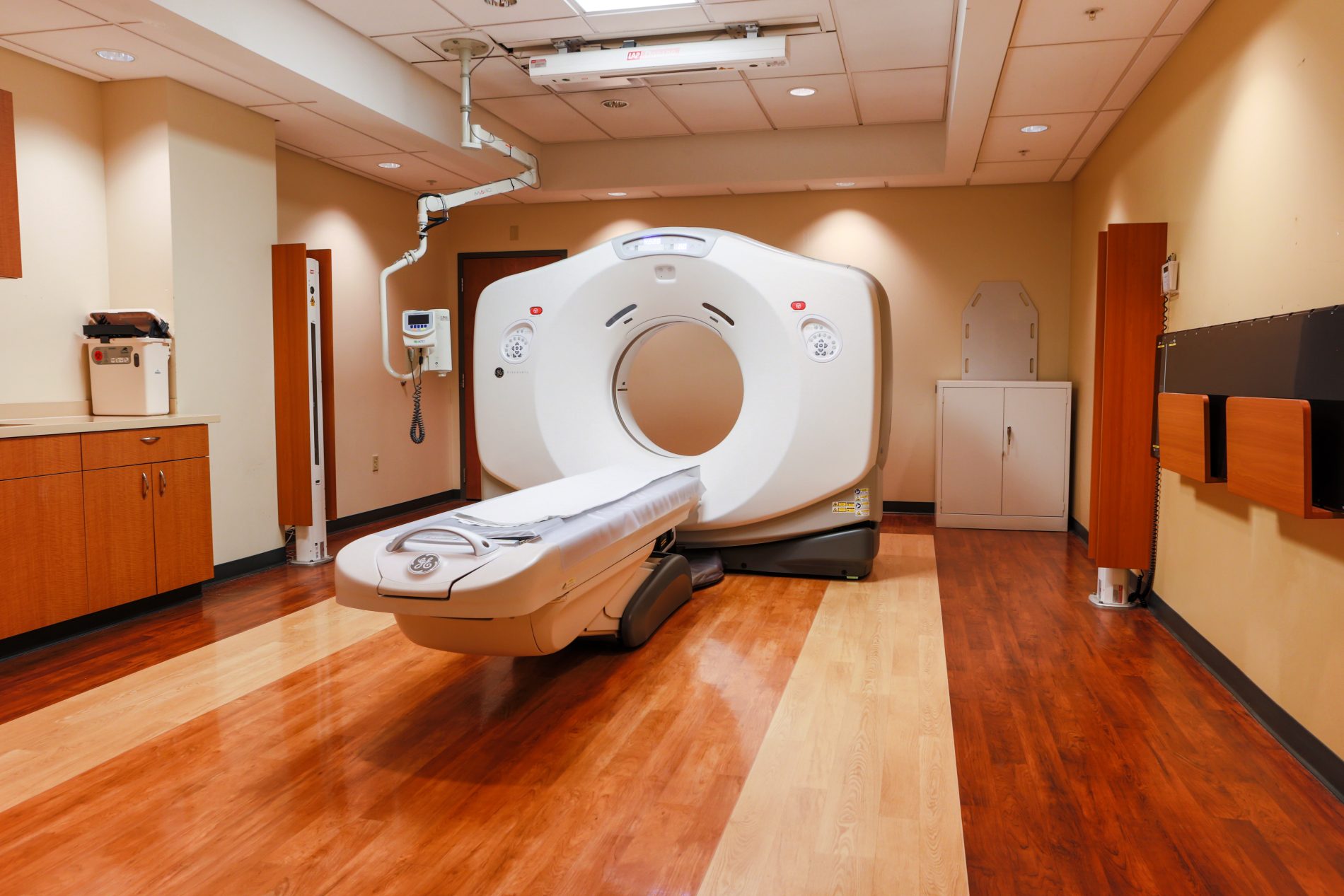
Medical imaging procedures, such as computed tomography scans (CT) and positron emission tomography scans (PET), are used to identify and diagnose many different cancers and conditions. Zangmeister Cancer Center continues to invest in next-generation technologies that provide precise views of internal organs, bones, soft tissues and blood vessels with immense clarity and detail. These scans and other imaging tests are performed and reviewed on-site.
What is a CT scan?
A Computed Tomography (CT) scan uses a combination of x-rays and computers to give the radiologist an advanced but non-invasive way to view your body's internal anatomy. A CT scan rapidly acquires 2-dimensional pictures of your anatomy which are then reconstructed by a computer into 3-dimensional images for in-depth clinical evaluation.
What is a PET/CT scan?
A PET/CT combines functional information from a positron emission tomography (PET) exam with anatomical information from a CT scan into one single exam. A PET scan detects changes in how your cells are using nutrients such as sugar and oxygen. Since these functional changes often take place before physical changes occur, PET can provide information that often allows your physician to make an earlier diagnosis.
The PET exam identifies metabolic activity in the cells, and the CT scan provides an anatomical reference or "roadmap". When these two scans are fused together, physicians can view metabolic changes seen on PET in the proper anatomical context with your body as seen on the CT scan.
Why do I need this exam?
Your exam results may have a major impact on your physician's diagnosis of a potential health problem and how a treatment plan is developed and managed in the event that a health issue is discovered. These tests not only help your physician diagnose a problem, they also help establish the extent and severity of that disease. Additionally, scan results help predict the likely outcome of various treatment alternatives, identify the best approach for treatment and help monitor your progress. That way, if you're not responding as well as expected, you can be switched to a more effective treatment as soon as possible.
How should I prepare for my exam?
CT (Abdomen/Pelvis): Nothing to eat or drink except water after midnight or 4 hours prior to exam. Please drink as much water as you can the day of your scan just prior to your appointment.
All Other Contrast CT's: Nothing to eat or drink except water 4 hours prior to exam.
PET/CT Preparation: Refrain from heavy exercise 48 hours prior to exam. Eat a low-carb meal (no sugar, fruit, breads, desserts) for the 2 meals before your exam and drink extra water the night before and the day of the exam. You are required to fast 4 hours prior to your exam (no food, drinks, snacks, candy, mints, etc., other than plenty of water). You may take any medication you need to take with water. Wear warm comfortable clothing preferably with no metal or jewelry. Arrive on time for your appointment to ensure the injectable glucose does not expire.
What should I expect when I arrive?
We will review your history and past exams. Depending on your procedure you may be asked to drink an oral contrast to help visualize your digestive tract. If you are having a PET/CT scan we will also take a small blood sample to ensure your blood glucose levels are within normal limits.
For the PET scan, you will receive an injection of a radioactive tracer similar to glucose in the vein. For most PET Scan studies you will wait one hour for the glucose-like injection to distribute itself evenly throughout your body. During this time, you will be asked to relax in an easy chair.
Safety of PET/CT exams
Both the PET/CT and CT exams are safe and effective diagnostic procedures. Although both involve exposure to diagnostic level radiation, your physician has determined that the risk of this exposure outweighs the risk of not having the scans. The radiopharmaceuticals used in a PET/CT scan do not remain in your system for long so there is no reason to avoid interacting with other people once you have left our facility.